Showing posts with label live. Show all posts

9 Apr 2016

Live review: Night at Brighton Dome

By Kiana Arnott-Job

The Nepali band Night, who describe their music as ‘new school folk’ are currently touring in the UK and promoting their debut album ‘Ani Ukaali Sangai Oraali.’ Their concert at Brighton Dome started with an intriguing instrumental percussion piece. With instruments dotted around the stage - ranging from guitars to drums and Nepali sarangi (stringed instrument, a little like a fiddle) and bansuri (bamboo flute) - each piece added more intricate layers and beautiful harmonies.

After a detailed explanation of their music, the last member of the band was brought on stage. His instrument? A leaf! This moment was still exciting, even though I had seen Night before at Shambala Festival last year, and you could tell that everyone in the venue was enthralled. The ‘leaf flute’ is a very old traditional Nepali instrument and is undoubtedly one of the most compelling instruments in the band’s extensive line-up, although it must be said that the various other elements deserve equal appreciation. Another stand-out feature was the use of vocals, weaving an intricate tapestry of melodies with mingling male and female colours.

Overall the experience was - to use a cliché - really unique. The audience’s interested silence during songs probably didn’t ease any initial nerves the band might have had, but there was no need to worry as the poise and beauty in their music shone through and the audience could hear it loud and clear. This was an impressively charming opening concert by Night and they will surely only get more confident as the tour goes on – catch them while you can!

8 Mar 2016

Live review: Otava Yo at Rich Mix (2)

By Ellie Panton 

“Who here speaks Russian?” Asked a band member to the London crowd. A chorus of excited shouts came in response. Otava Yo are a Russian folk band, so there was a language barrier for a few audience members. However, I was not completely lost, as every song had a spoken prelude in English, allowing us to appreciate the band’s quirky humour and even learn a bit about Russian folk culture.

 One of the best things about seeing Otava Yo live was the quality of verbal, audio and visual storytelling. Certain songs had creative lighting and pre-recorded sound effects. As it happens, blue lighting, sleigh bells and the sound of howling wind can make the idea of playing a Christmas carol in March seem sensible. The band’s use of unique instrumentation was also very entertaining. Violins played quasi guitar, two pipes being played simultaneously by one person, and an iPhone being used as a bass drone (to the amusement of the other band members).

My favourite song by far was about pancakes. As we were told in the prelude, pancakes are beloved in Slavic culture, as they represent the sun: warm and circular. And as both Russia and England are in such desperate need of sunshine, the band decided to sing the song to try and summon the sun. About halfway through, the music starts to slow and slide down in pitch, coming to a halt as one of the violinists clutches his stomach and groans. Another band member asks the audience what they should do, until they come to this conclusion: he should eat just one more. And the music starts back up again.

 The skilled, boisterous band seemed to attract one of the best audiences I’ve been in. Not only were most of us dancing and participating, but the band was able to flawlessly coordinate us into a three-part clapping rhythm. But the show’s biggest strength had to be the passionate performance of infectiously catchy music that was still being hummed on the tube back home.

Photo by Merlyn Driver.

7 Mar 2016

Live review: Otava Yo at University of Sheffield

By Joanna Booth

Otava Yo’s performance was intriguing from the beginning, starting with a background soundtrack of bird noises as the lights went down and the performers strolled casually on stage throughout the lively opening number. Their stage presence was cheerful and engaging and their folk tunes managed to be both dark and Slavic and utterly joyful at the same time. The traditional instrumentation and old Russian feel was balanced with a more contemporary sound which merged modern electric guitar solos into the folk texture beautifully.

It was music which told stories and with the help of humorous anecdotal introductions in English before each song, these stories rang through especially in the lovely vocals of fiddle player Yulia Usova, whose soprano voice doubled all the male voices to great effect.

Recorded sound effects returned multiple times, including film crackling to accompany a slow waltz from a very old Russian film. These kind of performance novelties really lifted the show element of the gig. Multi-instrumentalism was a definite theme of the night and a favourite with the audience was the use of pan pipes split into three sections and divided among the performers who danced whilst they played, grins on their faces and the ear flaps of their hats flapping.

By the second half they had a good portion of the audience on their feet dancing at the back of the hall and by the last song of their set list the dancers had moved to the front by the stage and the concert felt more like a festival set. This, they told us later, was first time this has happened to them in the UK and there was a feeling of such mutual delight at this that the band decided to extend their concert beyond its planned end because, as they said, the night was “only just beginning.” Judging from their popularity at this gig, it seems the same can be said of their international careers.

Otava Yo on stage. Photo by Merlyn Driver

6 Mar 2016

Live review: Otava Yo at Rich Mix

By Madeleine Woodley

From the moment I walked into London’s Rich Mix I was intrigued and excited for what the night was to offer. A stage with a washing line, a wooden duck statue and over twenty different types of instruments led to all different kinds of ideas running through my head. From the beginning to the end (of the washing line) not one audience member was disappointed with what ‘Otava Yo’ brought to the stage.

The six-member band from St Petersburg completely filled the room with their delightful fusion of traditional Russian folk and contemporary music. Their motivation was clear from the beginning, to show a revival of their traditional Russian folk heritage, which some would say has been lost, whilst presenting it in a way to make it accessible to the modern listener. Their intention was evident in more than just the music: from the outfits they wore, signature tank tops, peasantry dress and ushanka hats.

The mixture of their own Russian folk songs merged with modern day instruments such as the bass and electric guitar created a sound which was lively, innovative and rich in not only colour but harmony as well. The off-beat and dance like rhythms managed to get the whole audience moving their feet.

Their 21 different instruments definitely didn’t gather any dust either, each was utilized thoroughly, and in such a creative and inventive way to enhance their performance. From the archaic Russian village instruments such as the Gusli (Russian harp), to the Violin and lots of percussion instruments in between, we went on a musical journey through the Russian countryside, with Otava Yo showing fresh and original ways to fuse different instruments with music.

A particular highlight for myself was when the musicians used an iPhone as an instrument and incorporated that into one of the most moving songs of the evening. The use of the iPhone to produce rich cello sounds, mixed with pan pipes whilst the band was singing in harmony allowed the audience to see all sides of Otava Yo. Showing how their fusion of Russian folk music didn’t just produce upbeat, dynamic and danceable tunes, but songs with true raw emotion, capable of moving the audience emotionally too. This presented so much clearer the importance of the revival of traditional Russian folk music, and how integral it was for the band to communicate this to the audience (and the world).

Otava Yo were clearly passionate about presenting Russian folk music in a way which was accessible to 21st century listeners and they did all that and more. The audience was captivated from start to finish from not only the music, but by the band themselves. Communicating with the audience in between songs, telling jokes and educating the crowd on the meaning behind the songs they sung. Creative, inspiring, and genuinely interesting, Otava Yo are definitely one to check out if you get the chance.

Otava Yo at Rich Mix Lndon. Photo by Merlyn Driver

27 Feb 2016

What the audience says: Otava Yo!

Just seen the band at the RNCM in Manchester. Absolutely fantastic, already contender for best gig of the year! Thank you for playing for us!

Had a most agreeable time in Manchester last night at the RNCM catching up with the fabulous Russian folk-regenerators Otavo Yo. A wonderful evening, not a face left unsmiling. They're a simmering samovar full of great tunes. Excellent musicians, singers and, yes, entertainers. All delivered with superb musicianship, dry wit, engaging explanations, ensemble singing and dancing and lots of love. Don't miss 'em!

Best gig in a long long time!@mac_birmingham #OtavaYo! Outstanding! #music #Birmingham #stpetersburg 

Thank you for an unforgettable evening of wit, humour and wonderful joyous music at Bury St Edmunds. You came, you played, you conquered! Please come back to UK soon.

Just to say a very BIG THANK YOU to the most beautiful and talented folk musicians for an amazing performance in Bury St Edmunds.

So glad I took a chance on #OtavaYo @mac_birmingham. Just the thing to brighten up a rainy mid-week evening.

That was fantastic. Amazing music and the most infectious energy. Come back to Sheffield soon. 

Totally hooked from the start, superb gig, great musicianship.

One of the best concerts I've ever been to, even that I didn't understand much. Otava Yo ladies and gentleman! спасибо Oтава ё!

Fantastic Gig here in Sheffield last night @ the University.
* Great venue * Magic music * Superb atmosphere * Wonderful time was had by all
Very nice to see so many people dancing. Thanks Otava Yo - come back soon.


Vibrant #OtavaYo @sage_gateshead @makingtracks_uk delicious harmonies, verve, wit & huge warmth... Splendid gig!

Saw 'em in Bristol on Tuesday. They were all the things you say, and I was struck by the thought that they'd storm any UK folk festival, especially the bigger ones.

26 Feb 2016

Live review: Otava Yo at RNCM

By Ellie Sherwood

What do you expect from a performance when the first thing you see on stage is a clothes line, twenty different instruments, and a wooden duck statue? Otava Yo obviously like to entertain their audience, and tonight’s gig at RNCM was no exception.

The 6-piece band from St Petersburg played their fusion of Russian folk song and contemporary music with such energy and wit, whilst skilfully revealing their lively, extraordinary, and romantic colours. Their main motive is clear: to communicate the loss of tradition and dying of Russian folk songs, which were once so integral to Russian life. Their way of reviving this tradition is to meld the past and the present by mixing Russian folk songs with a funky bass, electric guitar, zesty riffs, and off-beat rhythms, making it very hard to not immediately get up and dance (although I’m sure this is what happens at plenty of their concerts).

Otava Yo definitely made use of the twenty different instruments on stage, which ranged from wooden spoons to bagpipes. One of my favourite parts of the performance was the way the two violins were used: often in harmony, playing a beautiful folk song melody whilst the electric instruments accompanied, bringing the songs forward into the 21stcentury.

The musicians are clearly passionate about the importance of tradition, and their commitment to reviving their folk music in such a spirited way is extremely powerful. Otava Yo’s music left the audience feeling both nostalgic for the past and excited about the present – a rare sentiment that only a band of such zeal, dedication, and talent can inspire.

26 Nov 2015

Live review: Söndörgö at NCEM

By David Forsdike

The Making Tracks tours are all about introducing British audiences to music from less-well known corners of the globe, and last night at the NCEM in York the audience was treated to a scintillating live performance from a Hungarian quintet, Söndörgö. These five Hungarians have this music in their blood - there are three brothers in the group, along with a cousin and a family friend – and the father of the brothers, Kalman Eredics was a founder member of the group Vujicsics. Joe Boyd’s label Hannibal Records released a Vujicsics album of Serbian music from Southern Hungary in 1988, and it is this same repertoire which Söndörgö re-create with such panache today.

These musicians may be Hungarians, but there is no violin or cimbalom here. Their instruments are tamburas of various sizes, which they have mastered to a high level of virtuosity. The smallest is the size of a ukulele, but in the hands of the group’s leader Aron Eredics, the eldest of the three brothers, it demonstrated a myriad of emotions, sometimes slow and ever so slightly mournful, but more often than not ending in a joyful torrent of cascading notes across its small soundboard - this is after all music for dancing!

The line-up of instruments was ever-changing. Sometimes there were string only pieces, others featured clarinet, flute, saxophone or trumpet solos; the accordion stole the limelight at times, and engaged in frantic duets with the lead tambura, revealing a tightness of ensemble and infectious energy which was simply breathtaking. Was this the intuitive precision and collaborative musicianship that only fellow family members can provide? Their repertoire included Gypsy songs, Macedonian tunes with an Oriental flavour, and some smaller scale duos featuring tunes collected by Bela Bartok; at times they even added some hearty vocals to the mix.

One of the real joys of the evening was the chance to witness a true acoustic performance. This has become such a rarity in this day and age, and it was a real delight to hear Söndörgö’s music fill the NCEM without any amplification. Lighting was used sparingly, and enhanced the occasion without being obtrusive. These musicians were truly enjoying themselves. A highlight of the evening came after the interval with a magical piece for tamburas alone. This featured slow moving chordal harmonies ending in the most delicate of all pianissimos as the lights faded to nothing. Truly memorable!


15 Nov 2015

Live review: Söndörgö at RNCM (2)

By Ellie Sherwood

Söndörgö’s performance at the RNCM last night marked the start of their tour of the UK. I was completely blown away by the passion and talent that emitted from all five musicians on stage, who kept us entertained by their virtuosic and superb playing right until the last note. Coming from a small Hungarian town near Budapest, Söndörgö create a refreshing and unique Balkan sound which is heavily inspired by Southern Slavic folk music. The band are motivated to preserve musical traditions of the Serbs and Croats as found in different settlements in Hungary, and through this renewal of folklore and heritage, they produce inimitable music that sounds both old and new; an echo of the past heard within the present.
The traditional Balkan instrument, the tambura, was played to its absolute maximum during last night’s gig. Similar to the mandolin, the tambura is a small and agile plucked instrument, and I have never seen or heard a dainty instrument be used in such a powerful and spritely way. Each member of Söndörgö played at least three different instruments during their performance such as the tambura, wooden whistle, guitar, double bass, trumpet, clarinet, saxophone, hand drum and accordion. It seemed every piece had a different set-up of instruments, and often a musician would swap instruments half way through a song. It was exciting to see such versatile musicians performing, and what was equally impressive was that Söndörgö’s unique sound did not once falter, despite all these exciting changes. They also enlivened us with singing a couple of traditional Hungarian tunes – whilst playing and swapping instruments, of course.
Perhaps the most impressive part of Söndörgö concert was the musicians’ ability to respond to the musical spontaneity of each other. They were obviously well-rehearsed and extremely tight, but there was very much still an element of surprise and impulsiveness that only comes from musicians who perform from their hearts every time. Söndörgö were playing for us, but they were also playing for themselves, and it was obvious that they were pushing the boundaries of their own music whilst on stage. Part of their ability to do that might come from the fact that four out of five of the musicians are related – three of them being brothers, and one being a cousin – but most of their talent is rooted in their skill of listening and watching each other whilst also listening to themselves. Their musicianship and talent provided the audience with an incredibly enjoyable and remarkable evening, and one also cannot forget Söndörgö’s use of stage lighting, which added an exclusive touch the their performance.
Thank you Söndörgö, and good luck with the rest of your tour!

Live at RNCM

14 Nov 2015

Live review: Söndörgö at RNCM (1)

By Lucie Phillips

On the opening night of their tour, Söndörgö’s exhilarating music entranced the audience of RNCM’s Studio Theatre from start to finish. Their unique approach to Balkan music is incredibly attractive and versatile, tempting the audience in every direction possible with their rapid Southern Slav folk dances and static, atmospheric improvisations. Even within songs their music takes the most unexpected, most pleasurable of turns: flitting between styles and speeds with ease and sophistication.
Söndörgö is primarily a tamburitza band, meaning that they play various types of tambura - a mandolin-like instrument. Occasionally wind instruments appear along with an accordion to add yet another colour to this already vibrant band. Between them Áron Eredics, Benjamin Eredics, Dávid Eredics, Salamon Eredics and Attila Buzás play at least 17 instruments to the highest of standards. The group made the decision on the night to not to be amplified but this did not hinder the balance at all - they are so skilful and such good musicians that when two of them played in harmony it still sounds like one, even without mics. As they ‘rock out’ the brothers challenge each other when soloing which makes the show all the more entertaining to watch. And occasionally they treat us to snippets of hearty singing, adding yet more skill and convincing us of their expertise.
As well as the individual virtuosity of Söndörgö, they are possibly one of the tightest bands you will ever come across. This tightness doesn’t merely come from endless rehearsal; it comes from knowing each other inside out as musicians which is why they manage to sound so organic and are never in danger of coming across as over rehearsed. Even the lighting team were part of this synergy and while the light show was startling at first, the juxtaposition of traditional music and modern technology wasn’t grating or twee but instead, sums up the band as a whole: 5 passionate, incredibly talented musicians who are enlightening the world with their music; not because it’s a niche commodity but because it is what they love. Music lovers will look back on this gig and smile in delight at the incomparable joy and talent consistently presented by Söndörgö. Their passion shines through and the audience cannot help but be enchanted by Söndörgö’s endearing manner and exhilarating performance.

Live at RNCM

9 Mar 2015

Live review: Trio Da Kali at NCEM York

By David Forsdike

Think of Mali and music and what comes to mind? Perhaps the pulsating electric guitars of one of the Touareg desert blues bands Tinariwen or Tamikrest. Or maybe the rippling harp-like sound of the kora played by a griot master such as Toumani Diabaté or Ballaké Sissoko.

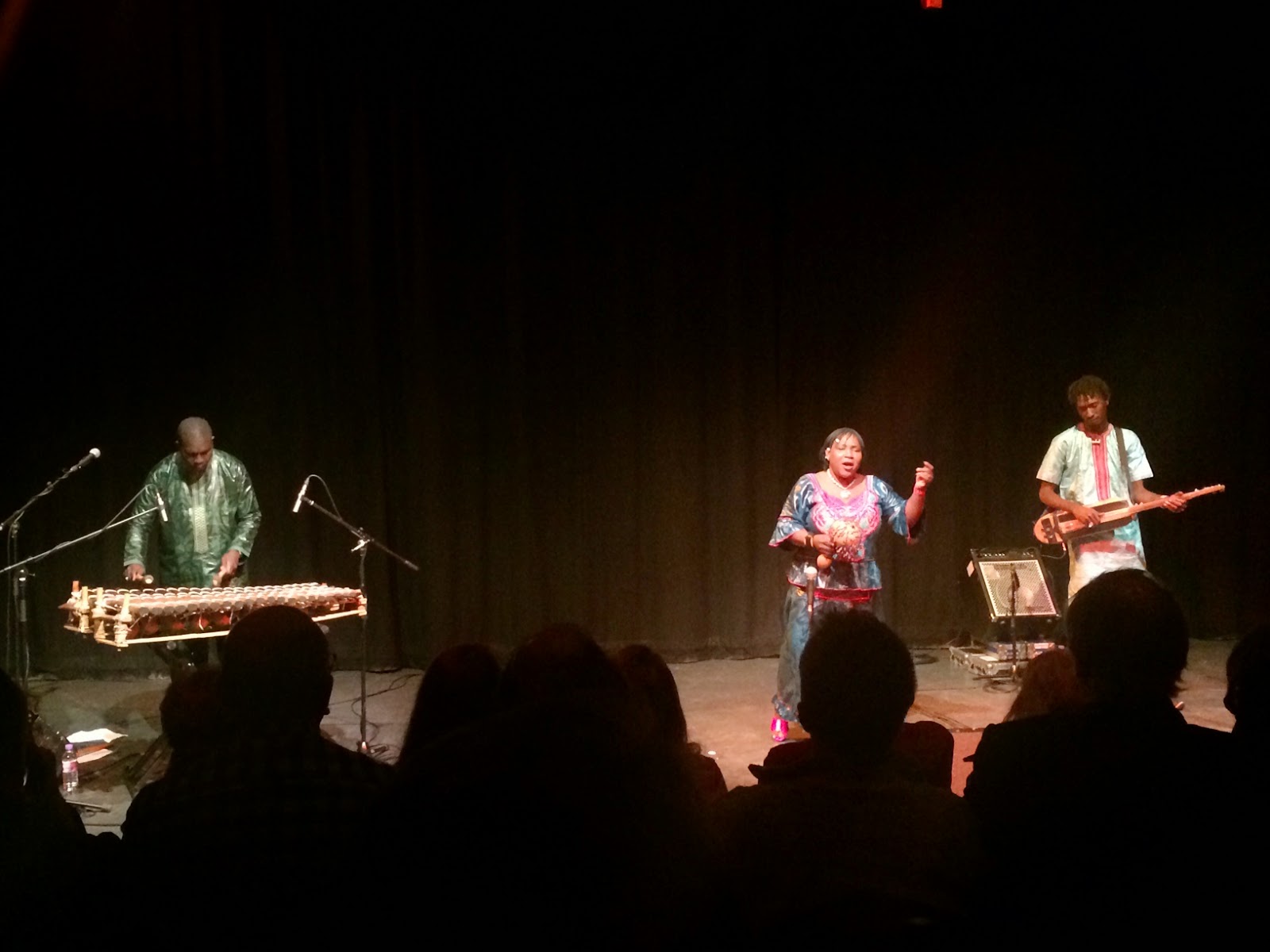
Trio da Kali shed a different light on this corner of the former Mande empire, transporting us to a forgotten era before many griots laid aside their traditional instruments and took up the guitar. Here, it is the balafon which leads the ensemble, and Lassana Diabaté proves to be a complete master of his instrument. He is joined by the singer Hawa Kassé Mady, and Mamadou Kouyaté, who plays a large bass version of the ngoni, Africa’s oldest string instrument.

Each half of the concert began with a solo. Hawa surprised a few in the audience when she launched into her short opening song, and soon the trio were on stage in full flight playing one of the work songs taught to her by her grandmother on the family farm, complete with mimed actions illustrating the work in the field. Love songs and wedding songs made up the majority of what was on offer, and it was soon apparent that this is a trio whose members are acutely aware of each other at all times. There was great delicacy in some of the interlocking patterns between voice and balafon, and a wide contrast in textures, often within the same song. Lassana switched from short delicate strokes of the bars of the instrument to fast dazzling scales up or down at a moment’s notice. The punchy bass notes of Mamadou’s ngoni were often to the fore, and both instrumentalists revelled in the chance to shine when given the spotlight, wearing huge smiles as they did so.

This tour was Trio da Kali’s first visit to the English regions, having only previously played in London, and we were treated to nearly two hours of spellbinding Mande music. Here’s to hoping they will be back to share more of their music with us in the near future.

3 Mar 2015

Live review: Trio Da Kali at RNCM Manchester

By Chloe Beth Smith

Following their formation in 2012, Trio Da Kali have dazzled audiences with their powerful and mesmerising performances in the UK, France and even the United States. Brought together by the Aga Khan Initiative, a scheme that works by uniting talented musicians across much of Central Asia and now also in Mali, Trio Da Kali play the music of the Griots of their Mande culture with a more modern and original feel.
The Manchester show took place in the Studio Theatre of the Royal Northern College of Music, an intimate venue which seats around 100 audience members., The almost full audience sat in the dim studio eagerly anticipating what was to come.
Opening the show, Hawa Kassé Mady Diabaté slowly drifted onto the spot lit stage and instantly mesmerised the audience with the powerful yet delicate tone of her a cappella voice. The ease with which she performed, commanded the stage and the atmosphere in the audience was noticeably relaxed. Balafonist and proclaimed leader of the ensemble, Lassana Diabaté soon joined Hawa on stage and the pair communicated beautifully. As Lassana alternated between mellow accompaniment of Hawa's vocal passages and his own extremely virtuosic playing through solo passages in which the mallets floated across the keys in a rapid blur of crisp, melismatic melodies. The pair was soon joined by the punching bass lines of Mamadou Kouyaté on an amplified ngoni, which brought the music to a more contemporary setting.
As the show progressed into the second half the audience eased into the groovy feel of the music, being persuaded by the musicians to dance and even sing along to certain passages. A wide smile of satisfaction was constantly visible across Lassana's face throughout the performance, perfectly reflecting the contentment of the audience.
Trio Da Kali are a superb example of a group of extremely skilled musicians working together in harmony, who perfectly compliment each other’s musical talents and tone. Their recently released EP with World Circuit is a great recording of wedding songs that allows for their music to be heard otherwise, though their energy and stamina still make for a must see live show.

Photo by Chloe Beth Smith

25 Feb 2015

What the audience says: Trio Da Kali

Stunning, wondrous show tonight. Enchanting. Thank you SO much!

Trio Da Kali were superb. A modern take on traditional Mali music. See them if you can.

They were sublime!

Man, it was on of the best gigs ever! It'll power up our souls for many moons from now...

Thank you Trio de Kali for tonight for the wonderful music at Rich Mix , you were truely amazing.

The concert... was quite superb and I enjoyed every minute of it.

Last night was so beautiful.

I was at the gig last night – it was AMAZING. Really loved it!

Just got home from your STUNNING show at the Pontadarwe Arts Centre. Thank you very much for a completely wonderful evening. We were transported, enchanted and left on cloud 9. Tomorrow I will take your CD into the Studio and start new sculpture from it. warmest wishes for your Tour.

We were transported to a better place too.

You were amazing tonight! Thank you

It was wonderful. Blown away by the Ngoni more than anything and almost a full house - really loved them.

Wonderful show at The Stables MK tonight. Great vocals and some virtuoso playing, particularly the balafon. Just when you thought it couldn't get any better, it did...and Take Five thrown in for good measure. That second balafon made the music very interesting.

Felt so privileged to attend @TrioDaKali's concert in York last night! Perfect treat!

The show last night was beautiful – the audience totally loved it and we are very glad to have another successful Making Tracks event under our belts.

Fabulous response to Trio da Kali - hypnotic & exhilarating performance @yorkearlymusic thank you.

Vous avez joue avec tant de passion ce soir! Merci :)

Lovely atmosphere at TrioDaKali's show at @brightdome last night.

Wonderful night in York - thank you!! Please come back soon!

What an excellent performance at the Stables last night. Truely amazing.

Merci beaucoup pour une superbe concert de ce soir au Le Apex.

Amazing amazing concert with TrioDaKali @CambJunction last night!! Go see them!

What an amazing, enchanting and fantastic performance. Spell- binding and wonderful.

Thank you TrioDaKali @makingtracks_uk for a fantastic show tonight. Catch them on their tour if you can.

Fabulous! Loved the gig and loving the EP too!

Wonderful show with TrioDaKali in Bristol tonight.

Beautiful night at The Sage with Trio Da Kali. Thank you.

These guys (and girl) were just so beautiful. Very touching.

Beautiful music - very touching indeed.

amazing night

perfect balance

Great gig last night, thank you!

I am captivated by your music, keep up the good work

superb!

One does so like a firmly struck balafon.

Just lovely music tonight @TheApexVenue from TrioDaKali!

TrioDaKali EP launch @RichMixLondon finishing off the week very nicely!

Photo: Sebastian Schutyser / Aga Khan Music Initiative

24 Feb 2015

Live review: Trio Da Kali at Rich Mix London

By Cara Stacey

It has been a few years since Trio Da Kali wowed audiences at the BBC Proms in 2013 and much has happened for the ensemble since. This February the trio have returned to tour the UK with last night’s concert at Richmix being their sole London date in a string of performances. For those unfamiliar with their work, Trio Da Kali is comprised of master songstress Hawa Kassé Mady (daughter of the great Kassé Mady Diabaté), Lassana Diabaté on balafon, and Mamadou Kouyaté on ngoniba.
Hawa Kassé Mady’s exceptionally strong and beautiful vocals opened up the concert, with a wandering solo song, and throughout the rest of the set, she wove beautifully ornamented, expressive stories for those present. Often when a vocalist has such presence (acoustically, musically, and otherwise), the accompanying musicians can fall into the background somewhat. Trio Da Kali maintain a perfect balance between Hawa’s sung melodies, the astounding virtuosity of Lassana Diabaté on his dual-manual balafon, and the resonance of Mamadou Kouyaté’s bass-heavy ngoniba. Throughout the two sets, the audience warmed up and drew near to dance, to listen, and to sing occasionally when Hawa encouraged them to do so.
Sonic space was maintained throughout the concert and some of the best moments were when Diabaté had the stage. The blur of his sticks flying across the balafon was reminiscent of Toumani Diabaté’s kora showmanship but Lassana Diabaté demonstrated how he can skilllfully highlight and develop melodic themes from the other instruments (ngoniba and vocal melody), often dissolving into racing lines and even citing Dave Brubeck’s “Take Five” at some point in the flurry of notes.
The bass sound of Mamadou Kouyaté’s ngoniba perfectly completes the trio’s sound. His own virtuosity was audible as soon as he took the stage, though perhaps it would have been nice to hear more of it. The resonance of his instrument was beautifully captured by the sound in the Richmix space, and he and Diabaté casually alternated roles between accompanying short bipartite rhythmic cycles, and more improvised tuneful fills.
The Trio’s version of “Jarabi" was the highlight of the evening- a delicate arrangement of a much-loved song of love. Much of their skill and musicianship can be heard on their latest offering, an EP entitled “Trio Da Kali”, but hearing this ensemble live is a must!

Photo by Kudaushe Tawanda

30 Nov 2014

What the audience says: Pascuala Ilabaca & Fauna

Pascuala Ilabaca & Miguel Razzouk at Rich Mix London. Photo by Ingrid Guyon.

an experience of pure happiness and elation!

Pascuala Ilabaca sings with her whole face, and makes music with her whole body

The best gig @GatesheadOTH @sage_gateshead this year with Pascuala Ilabaca & Faun.

Fantastic night in York!! Thank you so much - please come back next year ! :)

Absolutely brilliant gig tonight at Rich Mix, vibrant and full of joy, I loved it.

She really is incredible! A whirlwind of energy and one of the most engaging performers I have ever seen.

Fabulous concert in Cambridge last night! A lot of very happy people. Muchisimas gracias.

Pascuala and Fauna present a complete performance that is in itself a kind of art form. So slick in their synchronicity, and able to change the mood and style within the space of a beat, they are truly exciting to watch and hear.  

Pascuala Ilabaca y Fauna @RichMixLondon - absolutely adorable and brilliant - see them if you get a chance!

I love their energy and enthusiasm, brilliant musicians, and she has the star quality to take them further, great tracks, like the punky tracks as well, - chile punk  now that's a new new on me !

...  listening to her records did not prepare me in the slightest for the energy, talent and seduction that poured from the musicians when on stage.

A star in the making : I absolutely loved Pascuala Ilabaca at @RichMixLondon. Don't miss her @makingtracks_uk tour! 

Pascuala Ilabaca y Fauna created an experience of pure happiness and elation, and I very much urge all music-lovers to seek out future performances to encounter Pascuala’s remarkable music.

Pascuala Ilabaca: Amazing 1st half at @RichMixLondon, can't wait for part 2!! 

Just been to see Pascuala @RichMixLondon - amazing, jaw dropping Kate Bush like.

Escuchar a Pascuala Ilabaca en el @RichMixLondon no tiene precio! 

What a great concert!!!!

21 Nov 2014

Pascuala Ilabaca at Rich Mix London (2)

By Kheira Tarif

The concert hall at Richmix had the nostalgic feel of a jazz café on Tuesday night; the small tables were arranged in front of the stage and the lights were dimmed. My eyes were instantly drawn to the whipala hanging behind the stage – a symbol of the unity of all Latin American indigenous peoples. This setting certainly describes Pascuala Ilabaca’s phenomenal combination of styles. The singer emerged onto the stage with her band, all dressed in the bohemian style that reflects the culture of Valparaiso, in northern Chile. With a winning smile that instantly charmed the audience, Pascuala began to sing a solo introduction with a clear and powerfully emotive voice. The sound of Pascuala’s accordion reminded this listener of other South American traditions including tango, prominent in Chile and Argentina. Her band members were on guitar, drums, bass guitar and a sensational saxophone-player, which brought other musical influences to the Latin American sounds of cumbia and cueca. Pascuala’s performance also drew on Indian musical traditions – as she explained to the audience that she lived in India with her parents at the age of 11. The results of these influences is very successful, the crowd at Richmix was dancing emphatically before very long!
Pascuala Ilabaca’s performance does not comprise such a variety of styles in sound by coincidence. This conscientious and talented young woman wants to bring Latin America to the rest of the world through her music, and cites personas like Frida Kahlo, the famous Mexican artist; Violeta Parra, the Chilean folk singer and Victor Jara, the Chilean folk singer, poet and activist. In her first European tour, she clearly wants to bring European audiences closer to the cultural history she is so clearly proud of.
Live at Rich Mix London. Photo by Kheira Tarif.

19 Nov 2014

Live review: Pascuala Ilabaca Y Fauna at Rich Mix London

By Anita Datta

Pascuala and Fauna were greeted with cheers as they took their place on the Wiphala-decked stage at London’s Rich Mix. The audience was vibrant, but fell to perfect silence as Pascuala began to sing, unaccompanied, spinning a beautiful melody so full of emotion it was fit to burst. A master of invoking her audience to feel whatever emotion she wishes them too, Pascuala and Fauna soon broke into a lively and coordinated rendition of her well-known single Mamita, and the party was underway.
Pascuala Ilabaca sings with her whole face, and makes music with her whole body.  Dancing as she plays, her fluid and joyful movements seem to conjure the melodies from the other members of Fauna and radiate the sound that they together make. As a unit, Pascuala and Fauna present a complete performance that is in itself a kind of art form. So slick in their synchronicity, and able to change the mood and style within the space of a beat, they are truly exciting to watch and hear. 
Most impressive of all, however, are the range and virtuosity of Pascuala and Fauna. Perfectly fitting the scene of the London Jazz Festival, of which their performance is a part, solo improvisations expanded upon their known and loved tracks to the delight of the audience. Particularly unique was a fusion of an Indian Classical vocal raga with Chilean beats and musical styles, which remained respectfully faithful to the complicated rules of improvisation upon the raag and bols whilst creating a truly innovative and exhilarating musical experience. Other items showed the clear influence of vintage rock, even death metal and 1980s psychodelica and pop, with on-stage mixing by members of Fauna recreating a studio-polished performance.
Pascuala is an engaging and likeable hostess who captures the heart of the audience with her charm, unique vision and intelligent approach to her art. An all-around performance artist, together she and Fauna create a holistic musical experience that will engage and entertain any concert-goer, and meanwhile make them think differently about the world as well.
Pascuala Ilabaca live at Rich Mix London (18/11/14)

26 Apr 2013

Live Review: Johanna Juhola Reaktori at The Junction

By Robert Burnham-Rusk

Painting a story with their music, Johanna Juhola Reaktori whisk the audience away in an emotion fuelled, musical journey, that visits both comedy and tragedy.

Johanna Juhola Reaktori are a Finnish quartet who explore many different styles and genres throughout their lively set. The group mix elements of traditional folk and tango with electronic drum beats, conveying musical storytelling with a catchy dance vibe. Johanna describes the band’s sound as “Fantasy Tango” and played her song Fantasiatango at the 2007 Eurovision contest held in Finland, receiving well deserved recognition for her innovative music.

Unsure of exactly what I was about to witness from the genre defying quartet hailing from Helsinki, I took to my seat, excited. The house lights dimmed and a video of an old black and white film was projected on to the curtain at the back of the stage. The band bounded over to their instruments, in brightly coloured, cartoonlike outfits and one by one joined in with the music from the video. I soon realised that this wasn’t just simply a gig; it was an artistic performance, a show, an experience.

23 Apr 2013

Live Review: Johanna Juhola Reaktori at The Stables

By Charmaine White

I wasn't sure what to expect when I first sat down in the auditorium at The Stables in Milton Keynes. I'd never heard of Johanna Juhola until a few weeks ago, and tango music isn't my preferred choice of music, let alone Finnish tango. However, as the lights gently dimmed and the hall fell silent, there was no big entrance for this band. The quartet modestly took to their seats and with a nod to the audience, began doing what they do best. I was suddenly caught up in their talent. From Johanna Juhola's intricate finger work on the accordion, blended with an up-tempo bass line from Sara Puljula and the jazzy twinkling of Milla Viljamaa on the piano, pulled together by a tight electronic beat from Tuomas Norvio on the synth pad, the auditorium was suddenly brought alive by the sound of Finnish tango.

19 Apr 2013

Live Review: Johanna Juhola Reaktori at NCEM

By Desmond Clarke

Surrealist, globetrotting folktronica is rather unsual fare for York’s National Centre for Early Music; so much so that the audience, while warmly appreciative, at times seemed slightly baffled by the manic, impish figure of Johanna Juhola and her garishly dressed band. The musicians’ easy banter and obvious engagement with their songs however soon won over the eclectic crowd as they led us boldly through the world of Finnish tango music.

Live Review: Johanna Juhola Reaktori at NCEM (2)

By James Cave

Accordion-playing has a long tradition in Finland. In the 1940s and 50s, accordionists rose to prominence providing improvised accompaniment for wrestling matches, at that time the nation’s favourite sport. A key skill was disguising the participants’ flatulence: players who could improvise a special effect at a potentially embarrassing moment were highly prized.
And Finns also love to tango. The dance was introduced to the country a century ago, and has proved enduringly popular, with one in fifty taking part in the largest annual tango festival.
But hang on - this picture of high-kicking and wild abandon doesn’t fit with my image of Finnish people as fundamentally serious? I’ve been to Helsinki on numerous occasions: in my (possibly limited) experience Finns like nothing more than to follow a dip in a freezing lake with a quiet evening-in reading philosophy. The typical Finnish busker is more likely to serenade you with the Sibelius Violin Concerto than ‘Poker Face’.